


The right pallet racking system can improve storage capacity, material handling, and overall warehouse efficiency. The most suitable option depends on your inventory type, pallet quantity, forklift equipment, available space, and budget.
Below are four commonly used pallet racking systems and their typical applications.
1. Selective Pallet Racking
Selective pallet racking provides direct access to every pallet and is one of the most flexible warehouse storage systems.
Main advantages:
- Direct access to each pallet
- Compatible with standard forklifts
- Easy to install and adjust
- Suitable for changing inventory
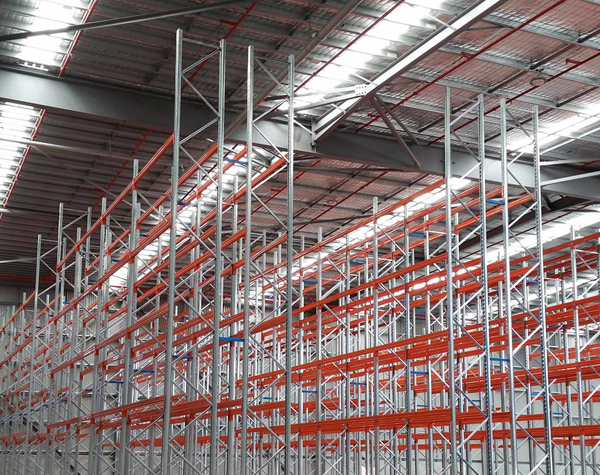
Best suited for:
- Warehouses with many SKUs
- Frequent pallet picking
- Low to medium storage density
This system is a practical choice when flexibility and accessibility are the main priorities.
2. Drive-In and Drive-Through Racking
Drive-in and drive-through racking store pallets in deep lanes, helping reduce aisle space and increase storage density.
Main advantages:
- High warehouse space utilization
- Fewer forklift aisles
- Suitable for bulk storage
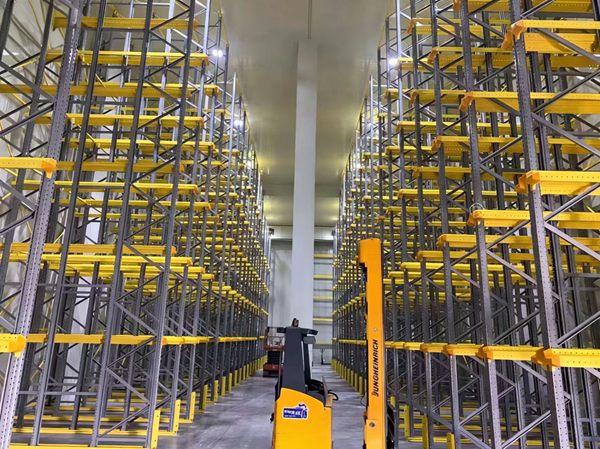
Best suited for:
- Large quantities of similar products
- Food and beverage storage
- Cold and frozen warehouses
- FIFO or LIFO inventory, depending on the layout
Drive-in racking normally supports LIFO operation, while drive-through racking can support FIFO access from both ends.
3. Double-Deep Pallet Racking
Double-deep racking stores pallets two positions deep, offering greater capacity than selective racking.
Main advantages:
- Increased pallet storage capacity
- Reduced aisle requirements
- Balance between density and accessibility
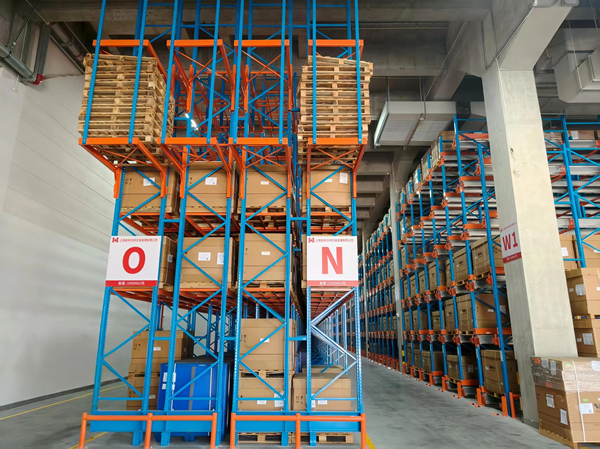
Best suited for:
- Warehouses with a medium number of SKUs
- Operations using specialized reach trucks
- Businesses seeking more storage without using a full deep-lane system
4. Radio Shuttle Racking
Radio shuttle racking uses a shuttle cart to move pallets inside the storage lane. The forklift only operates at the lane entrance.
Main advantages:
- High storage density
- Less forklift travel
- Faster pallet handling
- Improved operating safety
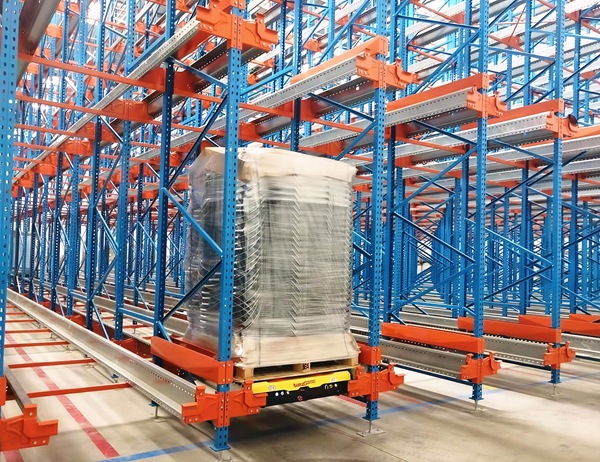
Best suited for:
- High-volume pallet storage
- Cold storage facilities
- Large quantities per SKU
- Semi-automated warehouse operations
Factors to Consider Before Choosing
Before selecting a pallet racking system, review the following:
Warehouse Conditions
- Floor area
- Clear ceiling height
- Floor load capacity
- Column and aisle layout
Inventory Information
- Number of SKUs
- Pallet dimensions
- Maximum pallet weight
- Stock turnover rate
Handling Equipment
- Forklift type
- Required aisle width
- Automation requirements
Investment
- Initial system cost
- Equipment requirements
- Long-term operating savings
- Future expansion needs
Conclusion
There is no single pallet racking system suitable for every warehouse.
Selective racking is ideal for direct access, drive-in racking supports high-density bulk storage, double-deep racking offers a balance between capacity and accessibility, and radio shuttle racking is suitable for high-volume semi-automated operations.
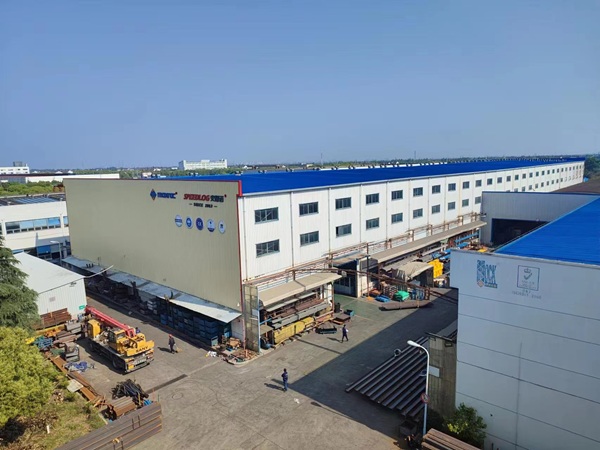
Working with an experienced pallet racking manufacturer can help ensure that the final system matches your warehouse layout, inventory flow, and future storage requirements.